Asset information · registers · digital twins

Know what you own, where it is, and what it needs

We help governments and asset owners build asset registers people trust, and connect them to BIM, GIS and the systems that run their assets, from one bridge to a national portfolio.

Talk to usHow it fits together
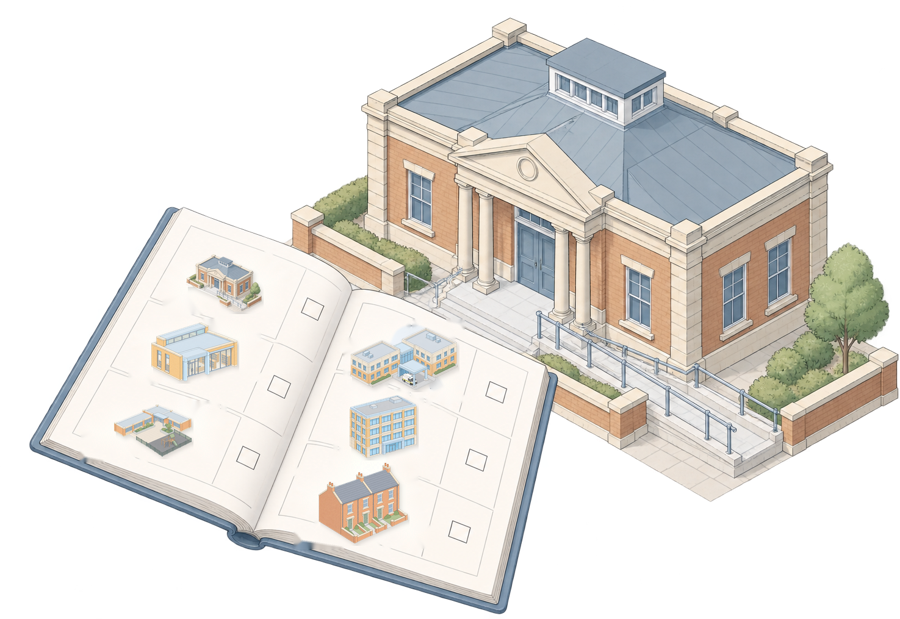
An open asset register beside a civic building, each page showing a different public asset

From one asset to a national register

An asset register is the single, trusted list of what you own or are responsible for: what each asset is, where it is, its condition, its value and who looks after it. Get it right and every decision about investment, maintenance and risk gets easier.

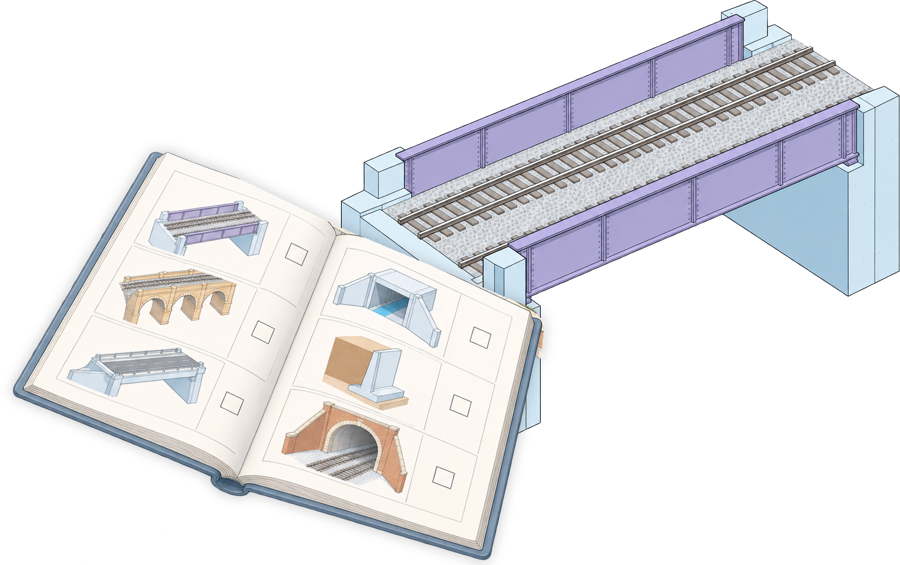
An asset register of rail structures beside a girder bridgeNATIONAL REGISTERS

Public assets at national scale

Registers that bring together roads, rail, water, energy and public buildings, so governments can see the whole portfolio, plan investment and report on it with confidence.
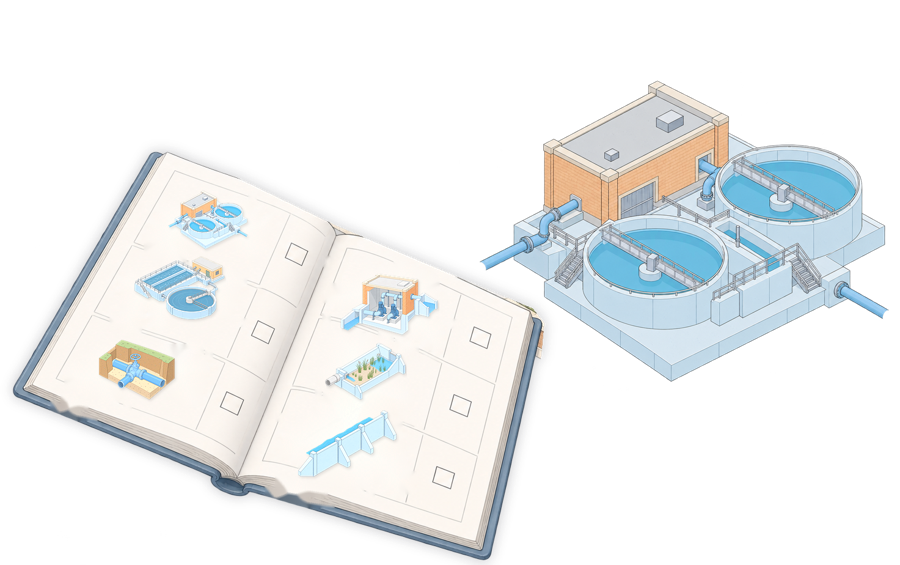
An asset register of a water network beside a treatment worksENTERPRISE REGISTERS

One register across the organisation

A single source of truth that your enterprise asset management (EAM), finance, GIS and project systems all draw on, instead of competing spreadsheets.
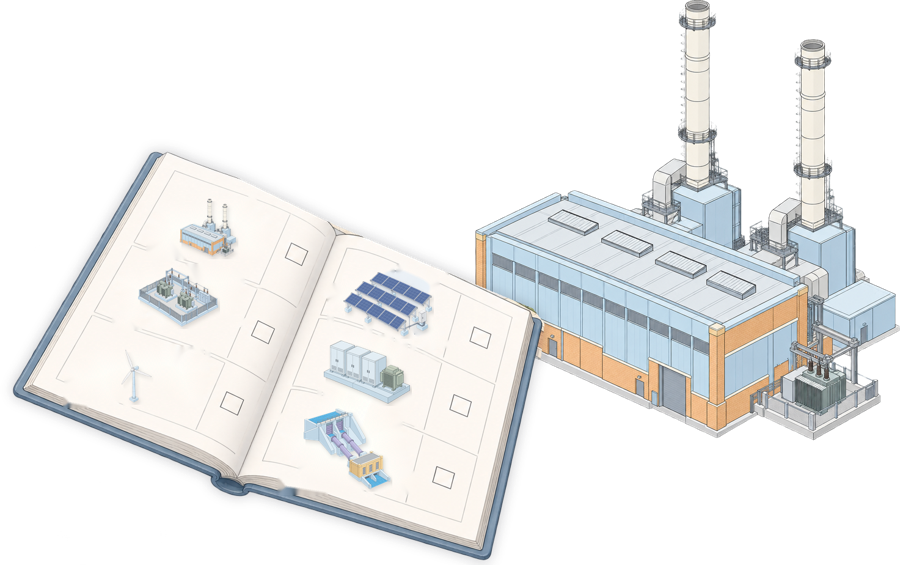
An asset register of an energy network beside a power stationNETWORKS AND ESTATES

Networks, estates and portfolios

Linear networks and large estates, from pipes, cables and track to schools and hospitals, recorded consistently so they can be compared, maintained and valued.

Experience at every scale

Our team has designed and delivered asset registers, asset information systems and enterprise asset management solutions for many clients around the world, including:

GovernmentsMultiple national governments, through World Bank programmes.
UK central governmentWorking with UK central government through the Cabinet Office.
Transport for LondonAsset information for one of the world's busiest transport networks.
And many moreInfrastructure owners, utilities and estates, in the UK and internationally.
BSI Associate ConsultantBSI Affiliate

Experts in the standards. The GeoEnable Group team behind BimEnable are BSI Associate Consultants and a BSI Affiliate, advising organisations on the ISO 19650 information management series and the ISO 55000 asset management series.

The information behind every asset

Every part of an asset can carry its own information: what it is, what it's made of, how it's classified, its condition and when it was last inspected. Structured this way, the same record works for engineers, managers, finance teams and regulators.

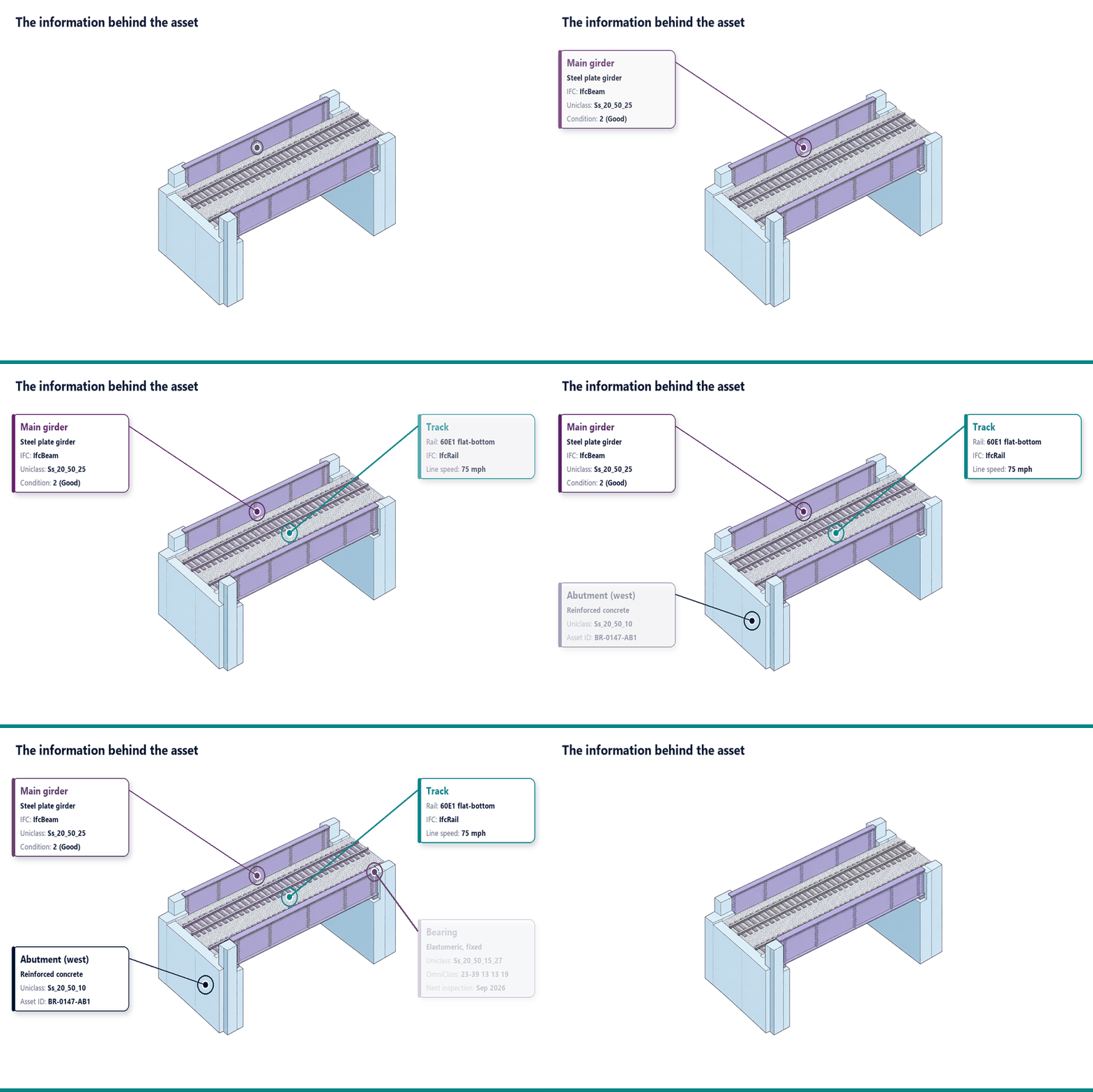
Animation: a rail bridge where labels pop up on the girder, track, abutment and bearing showing IFC, Uniclass and OmniClass codes, condition and inspection dates

A bridge, element by element

Each element of the bridge has a unique ID and agreed attributes. Classification codes such as Uniclass and OmniClass, and IFC classes for exchange, mean every system understands what it is.

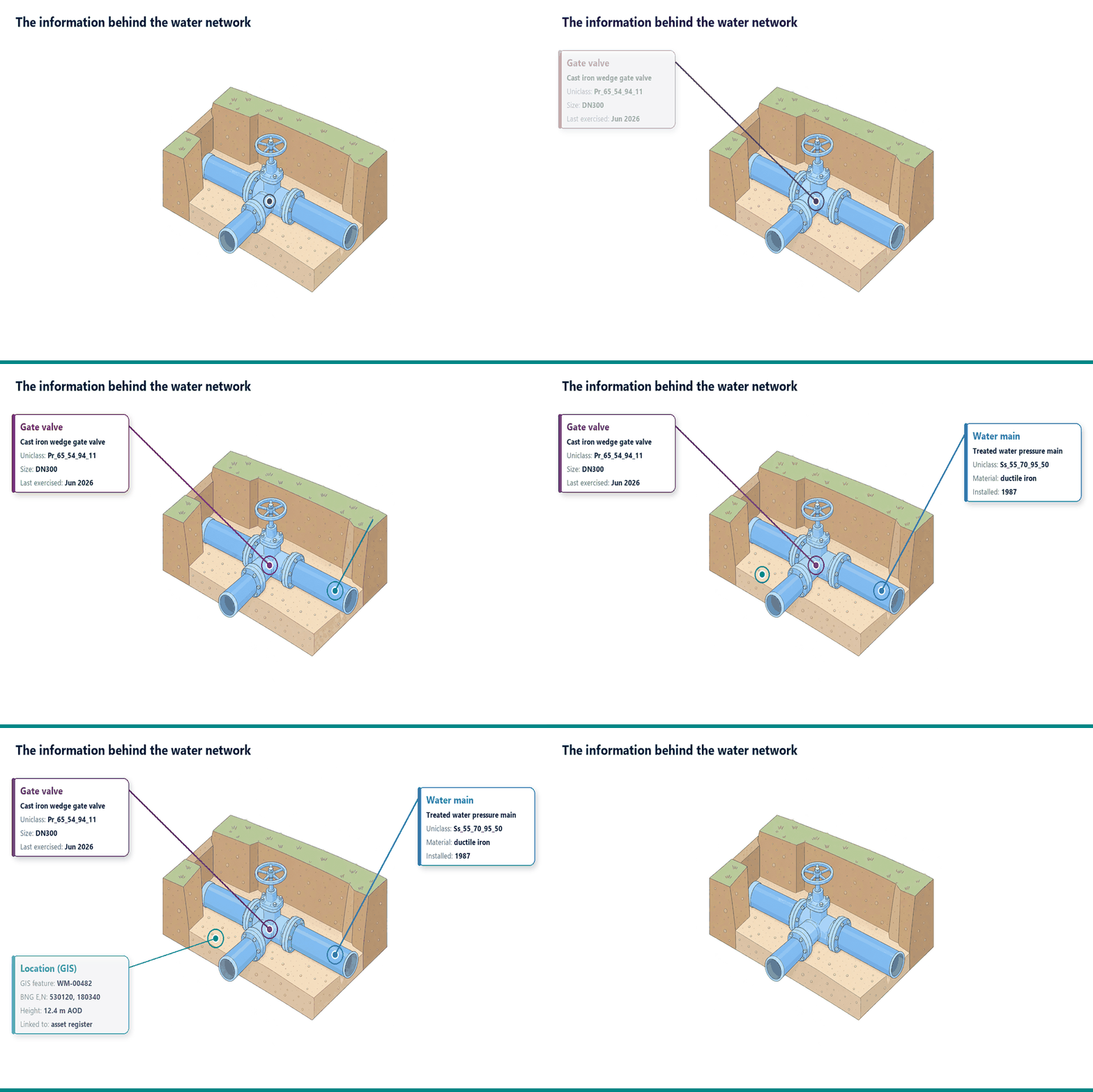
A water network, from register to map

The same approach works below ground. A valve's record links to its location in your GIS, so field teams, planners and the asset register all see the same asset.

  • Identify each asset and element once, with a unique reference.
  • Describe it with agreed attributes and classification.
  • Locate it on the map and link it to models and documents.
  • Maintain it as work is done, so the record stays true.
Animation: a buried water main and gate valve with labels showing Uniclass codes, size, material and its GIS feature ID

Asset information models and digital twins

In the ISO 19650 series, the asset information model (AIM) is the approved information that supports the operation and maintenance of an asset: data, documents and models, kept up to date across its whole life. The project information model (PIM) created during design and construction feeds the AIM at handover.

A digital twin is a connected, up-to-date digital representation of a physical asset or network that helps people make better decisions. It adds live data, such as sensors and work history, and analysis on top of that information.

The link is simple: a digital twin is only as good as the information behind it. A trusted asset register and AIM are the foundation. Without them, a digital twin is just a picture.

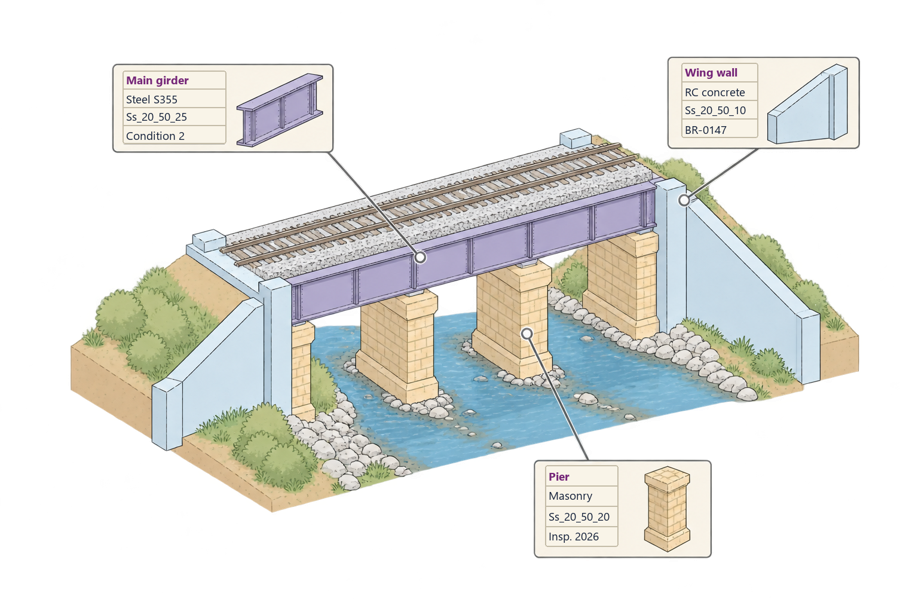
A rail bridge over a river with callouts linking the girder, wing wall and pier to their records in the asset information model

BIM, GIS and enterprise systems, working as one

The value comes from connecting information that usually lives apart. Linked through common IDs and master data, each system answers a different question about the same asset.

BIMWhat it is and how it's built: models, elements and their properties.
GISWhere it is and what it connects to: location, networks and context.
EAM and CAFMHow it's looked after: work orders, inspections, condition and cost.
Finance and reportingWhat it's worth: valuation, risk and investment planning.
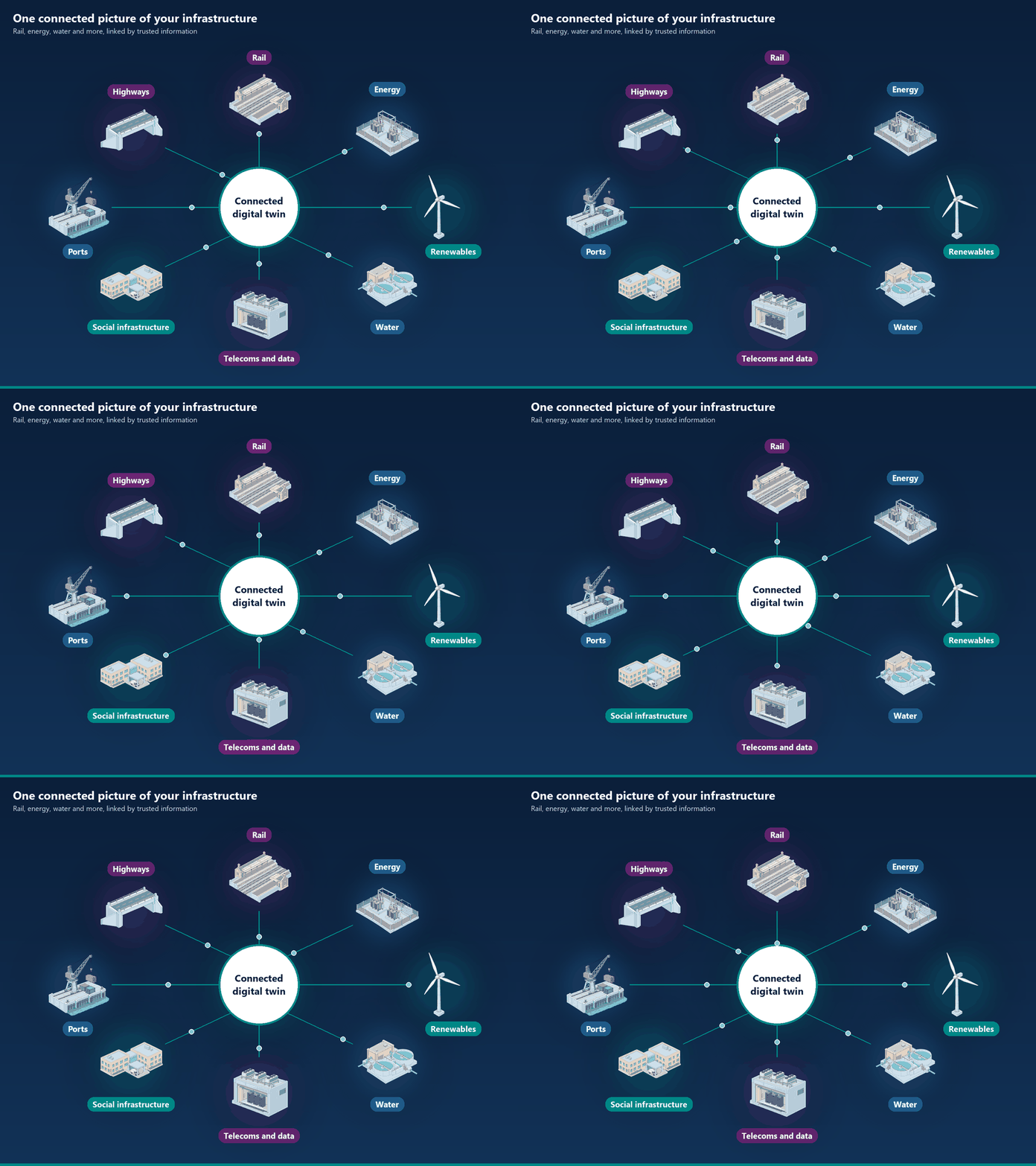
Animation: rail, energy, renewables, water, telecoms, social infrastructure, ports and highways connected to a central connected digital twin

Connected digital twins of whole networks, such as rail, energy and water working together, depend on each organisation's information being consistent enough to join up.

Location: where every asset sits

Location is what ties a register, a model and a map together. Every asset and element should know where it is, in a coordinate system everyone agrees on.

  • XYZ coordinates for position and height, so models and maps line up.
  • British National Grid eastings and northings for assets across Great Britain.
  • London Survey Grid, the local grid used for many London infrastructure projects.
  • Latitude and longitude (WGS 84) for assets in other countries and for global portfolios.
  • Reality capture: UAV/UAS (drone) surveys, laser scanning and GNSS, tied to geodetic control. Geodesy and geomatics keep every position accurate and consistent over time.

Getting the coordinate reference system right at the start avoids costly mismatches between design models, survey data and GIS later on.

Location Analytics, a GeoEnable service

Location Analytics

Location Analytics is a GeoEnable Group service that geospatially enables your information. Our geographic information system (GIS) experts bring the power of location to your asset registers and digital twins: mapping your assets, analysing them by place and network, and enriching them with context such as population, environment and risk.

Information is an asset. ISO 55000 defines an asset as an item, thing or entity that has potential or actual value to an organisation, and assets can be tangible or intangible. So the data and information about your assets are assets too: they need owners, standards, quality checks and investment, just like the bridges, pipes and buildings they describe.

Master data, classification and shared meaning

To join information up, everyone needs to mean the same thing by the same words. That's what master data management, classification, taxonomies and ontologies are for.

WhatWhat it gives you
Master data managementOne agreed record for each asset, with a unique ID and an owner, that every system uses. No more duplicates or conflicting versions.
Classification: Uniclass 2015 and OmniClassA common code for what each thing is, for example Ss_20_50_15 bridge bearing systems in Uniclass. Uniclass is the usual choice in the UK; OmniClass is widely used in North America.
Taxonomies and ontologiesAgreed definitions and the relationships between them (this bearing is part of that bridge, which is located in that route), so information can be joined up and reasoned about.
IFC (ISO 16739-1)An open format for exchanging models and their information between software, such as IfcBeam or IfcBearing.
COBieA structured, spreadsheet-friendly way to hand over asset data from projects into operations and your EAM or CAFM system.
Data dictionaries (ISO 23386 and ISO 23387)Shared, governed definitions of properties, so "condition" or "install date" means the same thing everywhere.

Codes shown are examples. We help you choose and apply the right schemes for your organisation and keep them consistent.

From classification to criticality: how assets depend on each other

An asset register is more than a list. Once every asset is classified and placed in a hierarchy, you can link assets together, see which ones matter most, and understand how a problem in one place can reach people far away.

1. ClassifyGive every asset a consistent type, using a scheme such as Uniclass 2015.
2. Build the hierarchyNetwork, system, asset, component: what is part of what.
3. Map and linkWhere each asset is, and what it feeds, supplies or relies on.
4. Identify criticalityWhich assets the most services, people and places depend on.

Infrastructure is a system of systems

Assets rarely work alone. A substation powers a pumping station; the pumping station keeps water flowing to a hospital, homes and businesses; a nearby road gives engineers access to all three. Together, networks like these provide the services people, society and the environment rely on every day.

That means risk doesn't stay in one place. A single failure can ripple through everything that depends on it, and several smaller issues can combine into something much bigger than any one of them alone.

What good information lets you do

  • See which assets are mission critical, and why
  • Trace dependencies across organisations and networks
  • Understand how risk could cascade before it happens
  • Prioritise investment and maintenance where it protects the most people
  • Use a digital twin to test "what if?" scenarios on trusted information

GIS: seeing the bigger picture, literally

Geographic information systems already do much of this today. Because every asset has a location, GIS can show which assets sit near each other, share a route or serve the same area, and trace networks from source to customer.

It lets you see the bigger picture in both senses: the strategic view of how everything connects, and an actual map that shows where a problem would spread and who it would affect.

Questions a map answers quickly

  • Which homes, schools and hospitals does this asset serve?
  • What else is in the flood zone, or along this route?
  • If this substation fails, which networks are affected next?
  • Where do different organisations' assets depend on each other?

This is where asset registers, the asset information model and digital twins come together: classification and hierarchy first, then the links between assets, then the insight.

Questions we're often asked

What is an asset register?

A single, trusted list of the assets an organisation owns or is responsible for, with the key information about each one: what it is, where it is, its condition, its value and who is responsible for it.

What is an asset information model (AIM)?

In the ISO 19650 series, the AIM is the approved information that supports the operation and maintenance of an asset: data, documents and models, kept up to date across its whole life.

How does an AIM relate to a digital twin?

Trusted, structured asset information is the foundation of a digital twin. The twin adds live data and analysis, but it can only be as good as the information behind it.

Uniclass or OmniClass?

In the UK, Uniclass 2015 is the usual choice. OmniClass is widely used in North America. Many organisations map between them; what matters most is one agreed approach used consistently.

Competent people make information trustworthy

Registers, models and digital twins are only as good as the people who build and maintain them. You need competent professionals who can demonstrate their knowledge, skills and experience. Awareness training gives everyone a shared starting point; it doesn't replace that competence.

CompetenceAn individual's proven ability, shown with evidence.
CapabilityCompetent people, clear processes and enabling technologies.
CapacityEnough of that capability, when you need it.
Digital skillsA widely recognised gap, in the UK and worldwide.

How BimEnable can help

From a first assessment to information flowing through your systems.

STRATEGY

Register design

  • Asset hierarchy and register structure
  • Information requirements (OIR, AIR)
  • Classification and data standards
DATA

Capture and migration

  • Bringing scattered records together
  • Survey, inspection and reality capture
  • Cleansing, de-duplication and validation
INTEGRATION

Connected systems

  • EAM and CAFM implementation
  • GIS and BIM integration
  • Master data management
ASSURANCE

Keep it trusted

  • Governance and data ownership
  • Quality checks and audits
  • Training for your teams

Talk to us about your asset information

Start with the standards

Asset registers and digital twins build on the ISO 19650 series. Get the big picture with our free 10-minute guide.

Watch the 10-minute guide, freeISO 19650 explained