Building Safety Act 2022 · building safety

The golden thread of information

In England, the Building Safety Act 2022 requires a digital golden thread of information for higher-risk buildings. We help clients, project teams and building owners get it right, using the ISO 19650 series and BS 8644-1.

Get the free Golden Thread GuideTalk to us
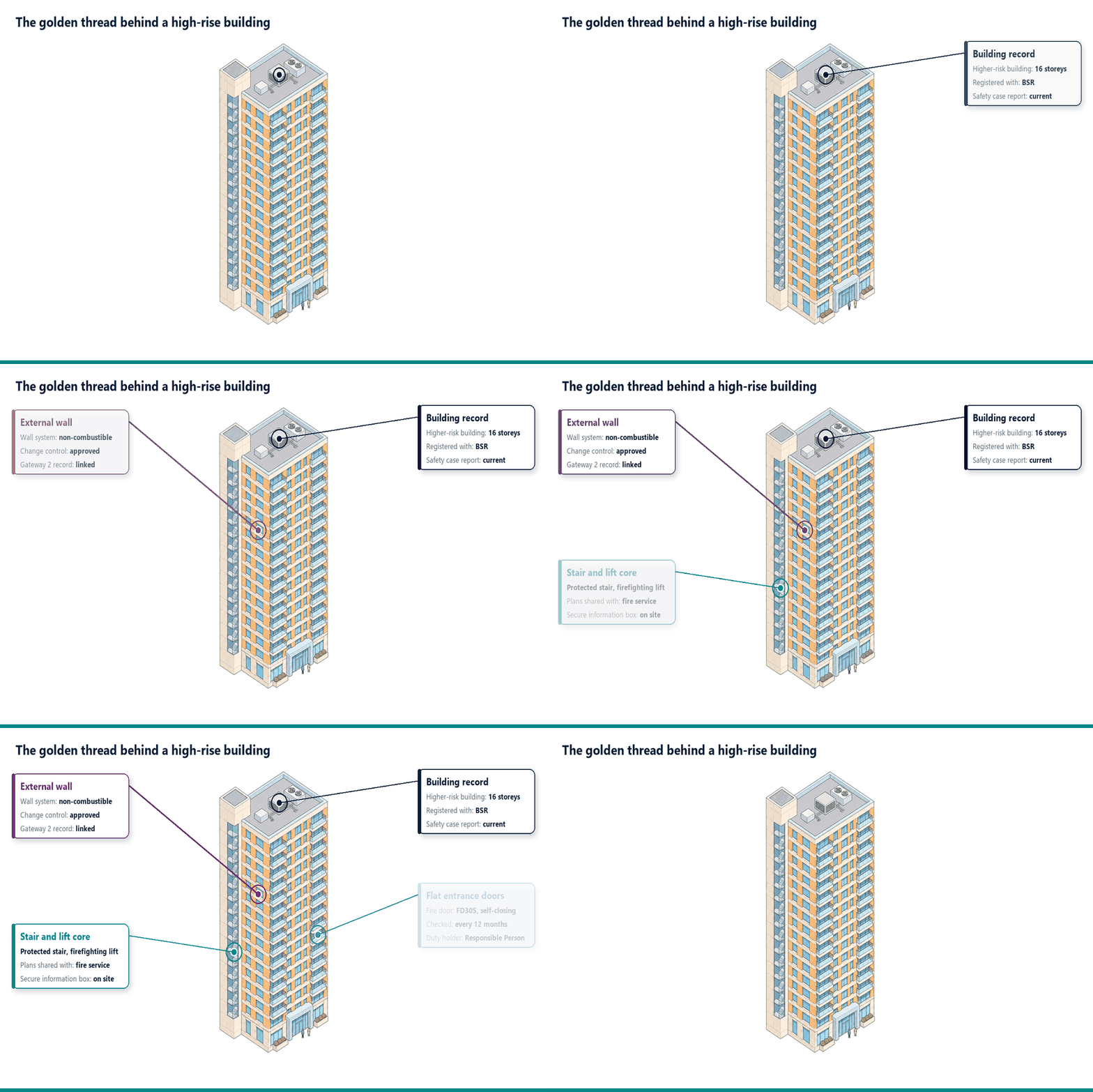
Animation: a high-rise residential building with labels showing the golden thread information for its external wall, stair and lift core, flat entrance doors and building record

What the golden thread is

The golden thread is a maintained digital record that helps people understand a building, show it complies and keep it safe, from design and construction through the years people live in it. It's both the information itself and the way it's managed.

Accurate and trustedIt matches what was built, and it's checked.
Residents and usersThe right people can see what they need.
CultureKeeping information right is part of everyday work.
Single source of truthOne authoritative place for each record.
SecureProtected, with controlled access.
AccountableEvery change is recorded: who, what and when.
UnderstandableConsistent and clear, using common standards.
Relevant and proportionateThe information that matters for safety.

Why it came about

On 14 June 2017, a fire at Grenfell Tower in west London took the lives of 72 people. Dame Judith Hackitt's independent review of building regulations and fire safety found that information about buildings was often missing, out of date or impossible to find when it mattered.

Her report, Building a Safer Future, called for a golden thread of information. The Building Safety Act 2022 made it a legal requirement for higher-risk buildings, overseen by the Building Safety Regulator.

Read more: Building a Safer Future (GOV.UK) · Golden thread guidance (GOV.UK) · Delivering the Golden Thread: Construction Leadership Council guidance (2024)

18 m
or more in height
7+
storeys
2+
residential units

Higher-risk buildings in England: at least 18 metres or 7 storeys with at least 2 residential units. In design and construction, hospitals and care homes of that height are included too. Check the detailed definitions for your building.

Who holds the golden thread?

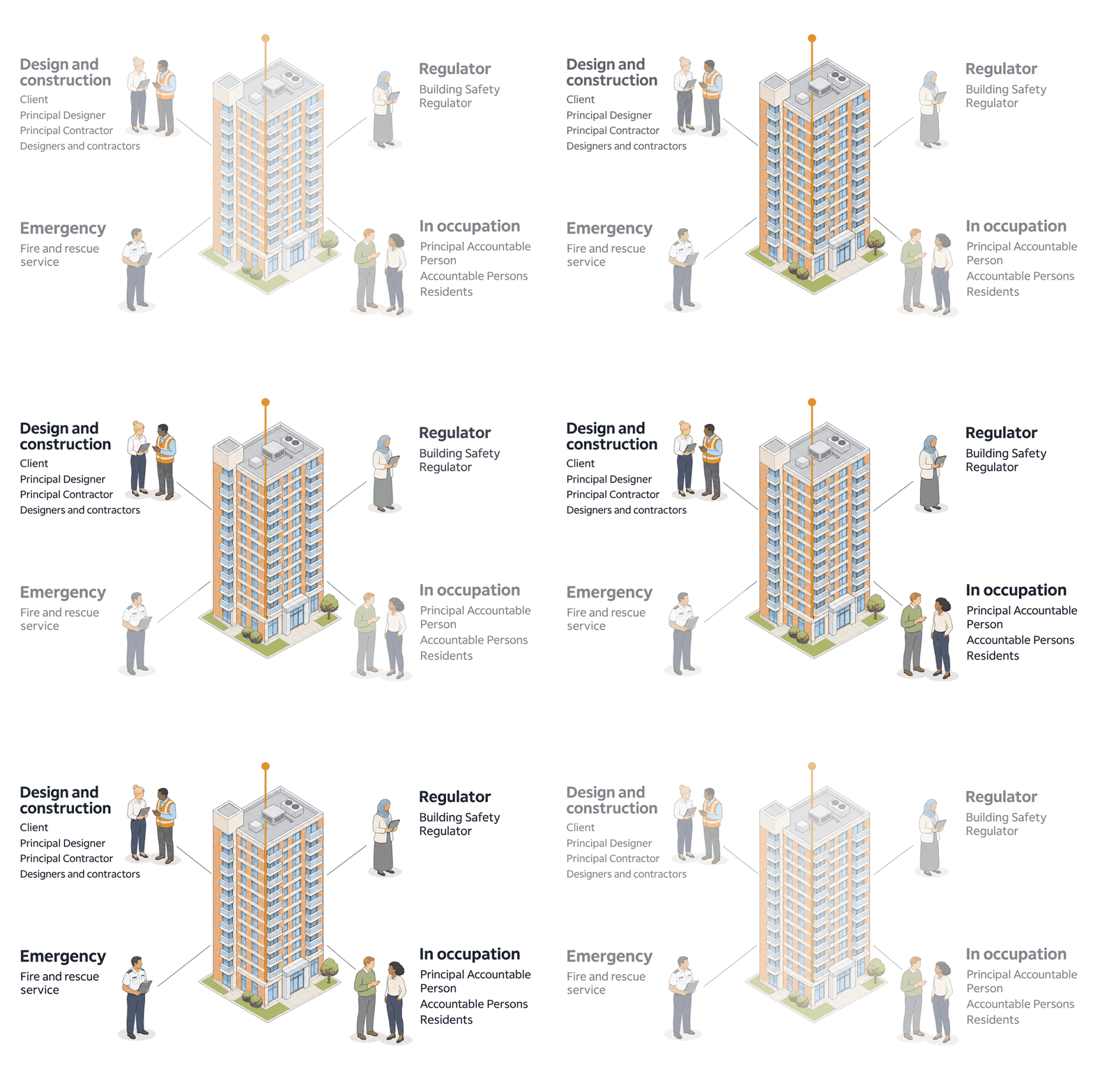
Everyone with a duty under the Act shares one thread of information. Work can be given to others, but legal duties stay with each dutyholder.

Building Safety Act roles around a high-rise building: client, principal designer, principal contractor, designers and contractors, Building Safety Regulator, principal accountable person, accountable persons, residents, and fire and rescue service

The three gateways

Higher-risk building work passes three checkpoints. Good information makes each one smoother.

GATEWAY 1

Planning

A fire statement with the planning application, so fire safety is considered from the start.
GATEWAY 2

Before building work

The Building Safety Regulator must approve the building control application before work starts. Changes after that need control.
GATEWAY 3

Completion

A completion certificate and registration are needed before people can live there, with the golden thread information handed over.
BimEnable THREAD Framework logo: a gold thread spiralling up a navy outline of a tall building

The BimEnable Golden THREAD Framework

Six practical steps to building safety information you can trust.

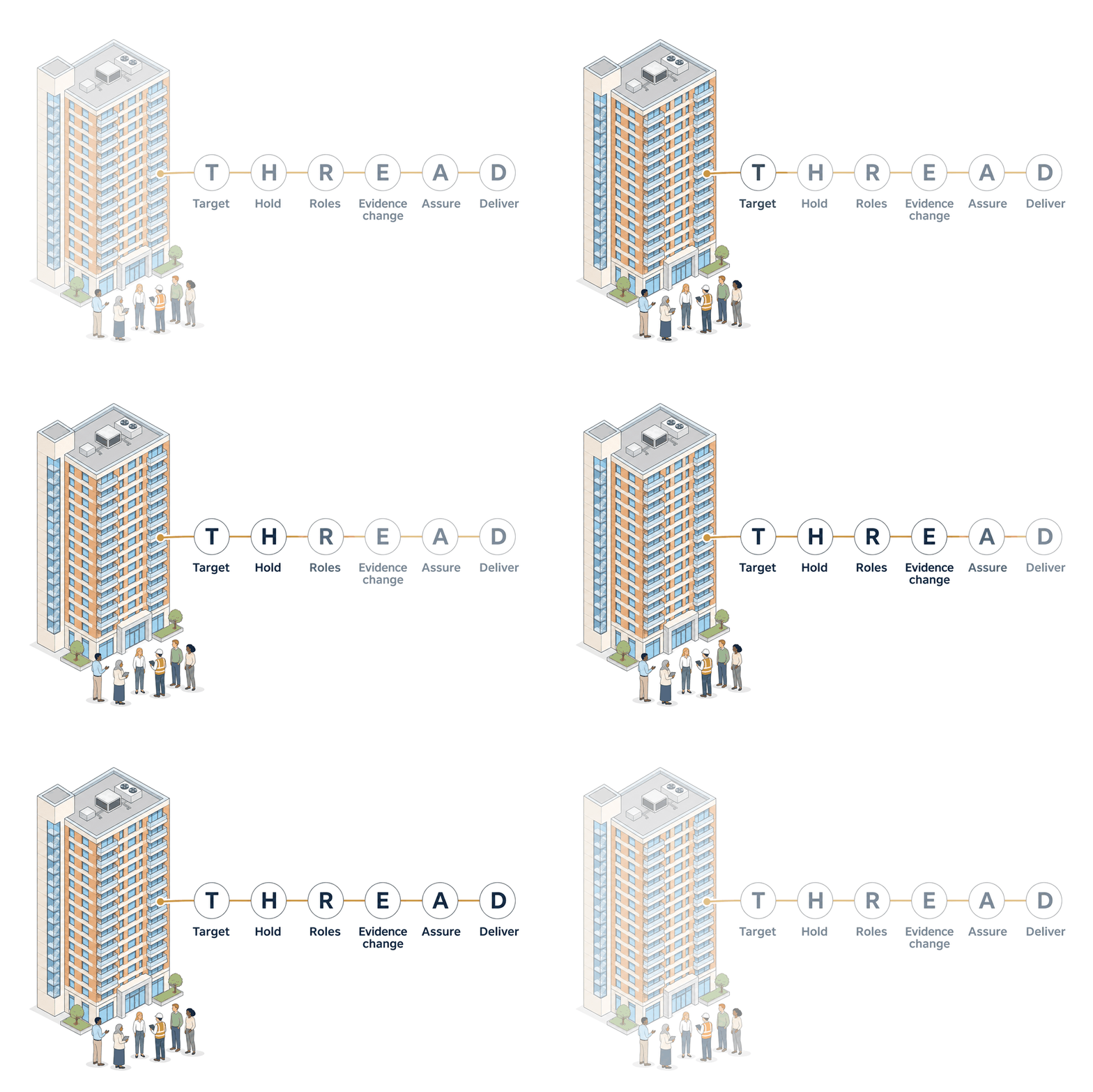
The THREAD Framework: Target, Hold, Roles, Evidence change, Assure, Deliver
T
Target. Agree which fire and structural safety information you need, for which decisions.
H
Hold. Keep it in one controlled digital place, with stable IDs and a tested export.
R
Roles. Name who creates, checks, approves and updates each kind of information.
E
Evidence change. Record and approve every change as it happens, ready for the gateways.
A
Assure. Test it: find any asset's drawing, specification and evidence from its ID.
D
Deliver. Hand it over in a usable form, and share it with residents, the regulator and fire services.
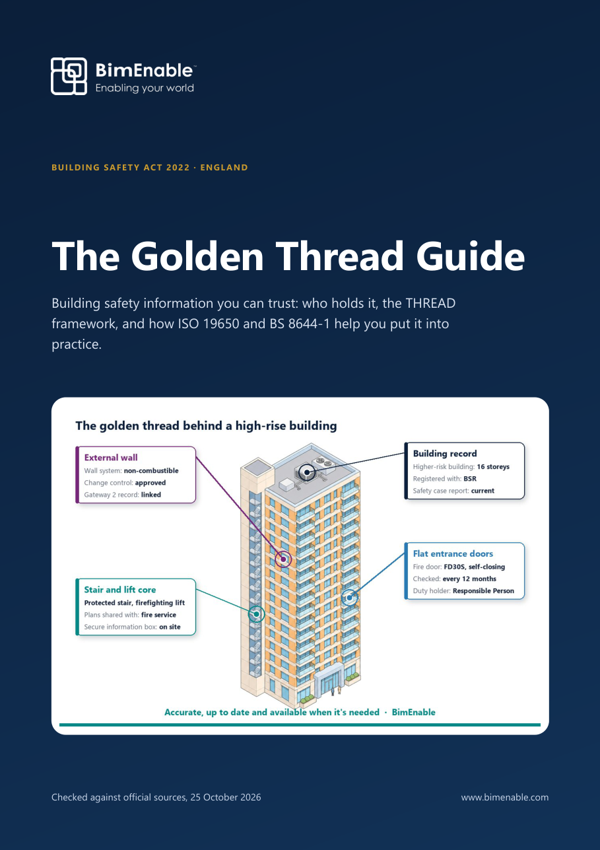
Cover of The Golden Thread Guide

Free: The Golden Thread Guide

An 8-page, plain-English guide: who holds the golden thread, the THREAD Framework, five handover tests, ISO 19650, BS 8644-1 and FIREie, and a worked fire door example. Plus a bonus workbook.

Get the free guide

ISO 19650, BS 8644-1 and FIREie

The law sets the duties and the information required. Standards give you a proven way to manage it, though none of them proves legal compliance on its own.

StandardHow it helps the golden thread
ISO 19650 seriesThe engine: information requirements, roles, a common data environment and controlled exchange across a building's whole life. ISO 19650 explained
ISO 19650-6Health and safety information, building on PAS 1192-6.
BS 8644-1:2022The British Standard for digital management of fire safety information, through design, construction, handover, asset management and emergency response. Works with ISO 19650.
FIREieThe fire information exchange process in BS 8644-1. It needs agreed content, people, timing and checks at each planned exchange point.
COBieStructured handover of asset data into operations and maintenance systems.
ISO 7817-1Level of information need: just enough information, at the right time (it replaced BS EN 17412-1).
ISO 55001Asset management systems: keeping the golden thread working through the whole life of the building.

Questions we're often asked

Is a 3D model or digital twin required?

No. Neither is a legal requirement. PDFs and spreadsheets can be part of the answer: what matters is the content, the controls and usable access.

Can we hand the golden thread to a managing agent?

You can give them the work, but not the legal duty. Accountable Persons and the Principal Accountable Person keep their legal obligations.

Does following ISO 19650 or BS 8644-1 mean we comply?

Not on its own. The standards are a proven way to manage the information; the law sets what's required. Use both together.

What is FIREie?

The fire information exchange process introduced in BS 8644-1:2022. It doesn't prescribe a schema; it needs agreed content, people, timing and checks at each exchange.

Competence is at the heart of building safety

The Building Safety Act expects dutyholders to have the skills, knowledge, experience and behaviours their role needs, and organisations to have the capability to match. Our guide and training build awareness and shared understanding. They support, but never replace, the competence each dutyholder must be able to demonstrate.

COMPETENCE

The individual

Proven skills, knowledge, experience and behaviours for the role, shown with evidence.
CAPABILITY

The organisation

Competent people, clear processes and enabling technologies, working together.
CAPACITY

Enough, when needed

Enough of that capability, at the right time, across design, construction and occupation.

How BimEnable can help

Build it, keep it, prove it.

BUILD IT

Set it up right

  • Readiness review and gap analysis
  • Information requirements and exchanges
  • A fire door pilot, end to end
KEEP IT

Keep it working

  • Common data environment and asset register
  • Links to CAFM, EAM and GIS
  • Change control in occupation
PROVE IT

Show it's trusted

  • Handover and acceptance tests
  • Audits and quality checks
  • Training for your teams

Free readiness assessmentTalk to us

Get the free Golden Thread Guide

Eight pages, plain English, with the THREAD Framework and a bonus workbook.

Get the free guideISO 19650 in 10 minutes, free

This page is general information, not legal advice. Always check the current legislation and official guidance, including the Construction Leadership Council's Delivering the Golden Thread, and take advice from competent legal, fire and structural professionals. Legal duties stay with each dutyholder.